7 Proven Strategies to Get the Best Health Insurance Quotes in 2026
Table of Contents
The Importance of Getting Accurate Health Insurance Quotes
Finding the right health insurance plan can be a daunting task, but obtaining accurate health insurance quotes is the first step toward securing affordable and comprehensive coverage. With medical costs constantly rising, having the right insurance policy is essential to protect your financial well-being and ensure you have access to quality healthcare.
When you request health insurance quotes, you are essentially asking insurance providers to estimate how much you will pay for a specific level of coverage. These quotes allow you to compare different plans side-by-side, helping you make an informed decision that aligns with your budget and healthcare needs.
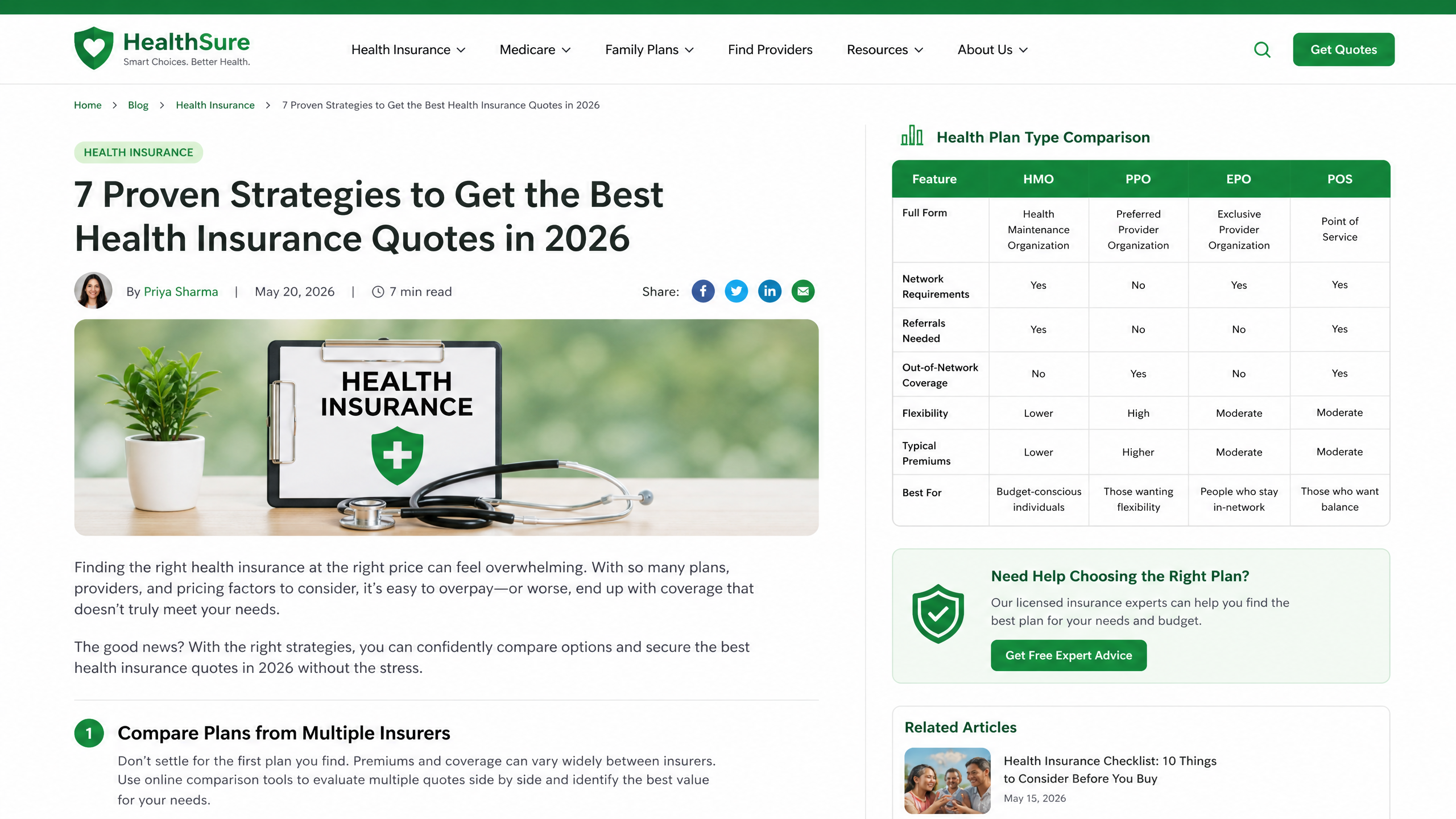
7 Proven Strategies for Finding the Best Quotes
To ensure you get the best possible health insurance quotes, follow these seven proven strategies:
1. Start Early
Do not wait until the last minute to start looking for coverage. Open enrollment periods can be brief, and gathering the necessary information to get accurate health insurance quotes takes time. Starting early allows you to thoroughly research different plans and providers. The ACA open enrollment period typically runs from November 1 to January 15 , giving you a limited window to make your decision.
2. Gather All Necessary Information
Before you begin requesting health insurance quotes, make sure you have all your personal information readily available. This includes your age, location, household size, and details about any pre-existing conditions. Accurate information will result in more precise quotes and prevent any surprises later in the process.
3. Use Online Comparison Tools
The internet is a valuable resource for comparing health insurance quotes. Many websites offer comparison tools that allow you to view plans from multiple providers at once. These tools can save you a significant amount of time and help you identify the most competitive rates. For example, you can compare options through HealthCare.gov or through your state’s exchange .
4. Consider Your Healthcare Needs
When evaluating health insurance quotes, think about your specific healthcare needs. How often do you visit the doctor? Do you take any prescription medications? Do you have a preferred doctor or hospital? Choosing a plan that aligns with your needs will prevent you from paying for coverage you do not need.
5. Look Beyond the Premium
The monthly premium is just one component of the total cost of a health insurance plan. When comparing health insurance quotes, be sure to also consider the deductible, copayments, coinsurance, and out-of-pocket maximum. A plan with a lower premium may have higher out-of-pocket costs if you require significant medical care.
6. Check for Subsidies and Tax Credits
Depending on your income and family size, you may be eligible for subsidies or tax credits that can significantly reduce the cost of your health insurance. Be sure to inquire about these options when requesting health insurance quotes. For 2026, the ACA open enrollment period provides access to enhanced subsidies for many Americans.
7. Consult with an Insurance Broker
If you find the process of getting health insurance quotes overwhelming, consider consulting with an insurance broker. Brokers are licensed professionals who can help you navigate the complex world of health insurance and find the plan that best suits your needs. They typically do not charge a fee to consumers, as they are compensated by the insurance companies.
Understanding the Different Types of Health Insurance
When comparing health insurance quotes, you will encounter several different types of plans. Understanding the differences between these plans is crucial for making an informed decision.
|
Plan Type
|
Full Name
|
Network Flexibility
|
Referral Needed
|
Out-of-Network Coverage
|
Best For
|
|
HMO
|
Health Maintenance Organization
|
Low
|
Yes
|
No (except emergencies)
|
Budget-conscious individuals
|
|
PPO
|
Preferred Provider Organization
|
High
|
No
|
Yes (at higher cost)
|
Those wanting flexibility
|
|
EPO
|
Exclusive Provider Organization
|
Moderate
|
No
|
No (except emergencies)
|
People who stay in-network
|
|
POS
|
Point of Service
|
Moderate
|
Yes
|
Yes (at higher cost)
|
Those who want balance
|
How to Compare Health Insurance Quotes Effectively
To effectively compare health insurance quotes, create a spreadsheet or use a comparison tool to organize the information. For each plan, list the monthly premium, deductible, copayments, coinsurance, out-of-pocket maximum, and network restrictions.
By comparing these factors side-by-side, you can easily identify the plan that offers the best value for your specific healthcare needs and budget. When you look at health insurance quotes, the plan with the lowest premium is not always the best choice. Consider your total annual cost, including the deductible and out-of-pocket maximum.
The Role of Open Enrollment and Special Enrollment Periods
Open enrollment is a specific time of year when you can sign up for or change your health insurance plan. The Affordable Care Act (ACA) open enrollment period typically runs from November 1 to January 15 .
If you miss the open enrollment period, you may still be able to enroll in a plan during a Special Enrollment Period (SEP). SEPs are triggered by certain life events, such as getting married, having a baby, or losing your job .
|
Enrollment Period
|
Dates
|
What You Can Do
|
|
Annual Open Enrollment
|
Nov 1 – Jan 15
|
Enroll, switch, or drop a plan
|
|
Medicare Open Enrollment
|
Oct 15 – Dec 7
|
Change Medicare Advantage or Part D
|
|
Special Enrollment Period
|
Varies by event
|
Enroll within 60 days of qualifying event
|
Common Mistakes to Avoid When Getting Quotes
When obtaining health insurance quotes, be careful to avoid these common mistakes:
Providing inaccurate information: This can lead to incorrect quotes and potential issues with your coverage later on. Always be honest about your health history and household details.
Focusing solely on the premium: As mentioned earlier, the premium is just one part of the total cost. A plan with a $200 monthly premium and a $500 deductible may be cheaper overall than a plan with a $100 premium and a $5,000 deductible.
Ignoring the network: Make sure your preferred doctors and hospitals are in the plan’s network. Going out of network can result in significantly higher costs.
Not reading the fine print: Be sure to understand the terms and conditions of the plan before you enroll. Pay attention to exclusions, limitations, and any waiting periods.
Conclusion
Getting accurate health insurance quotes is essential for finding the right health insurance plan. By following these seven proven strategies, you can compare plans effectively and secure affordable coverage that meets your healthcare needs.
Remember that the best plan is not necessarily the cheapest one. The best plan is the one that provides the right balance of coverage and cost for your specific situation. Do not hesitate to seek professional advice if you need help making a decision.
For more information on navigating the digital landscape, check out our guides on Google Ad Manager Approval, 7 Proven Steps to Unlock Connectia ADX Approval, and Google AdX Approval Requirements.