7 Essential Tips for Choosing the Right Private Health Insurance Plans in 2026
Table of Contents
The Benefits of Private Health Insurance Plans
In an era where healthcare costs are constantly rising, securing comprehensive coverage is a top priority for many families. Private health insurance plans offer a valuable alternative to employer-sponsored coverage, providing individuals and families with the flexibility to choose a plan that best fits their specific needs and budget.
One of the primary benefits of private health insurance plans is the ability to choose your own doctors and hospitals. Many private plans offer a wide network of healthcare providers, ensuring that you have access to quality care whenever you need it. Additionally, these plans often include coverage for prescription drugs, preventative care, and emergency services.
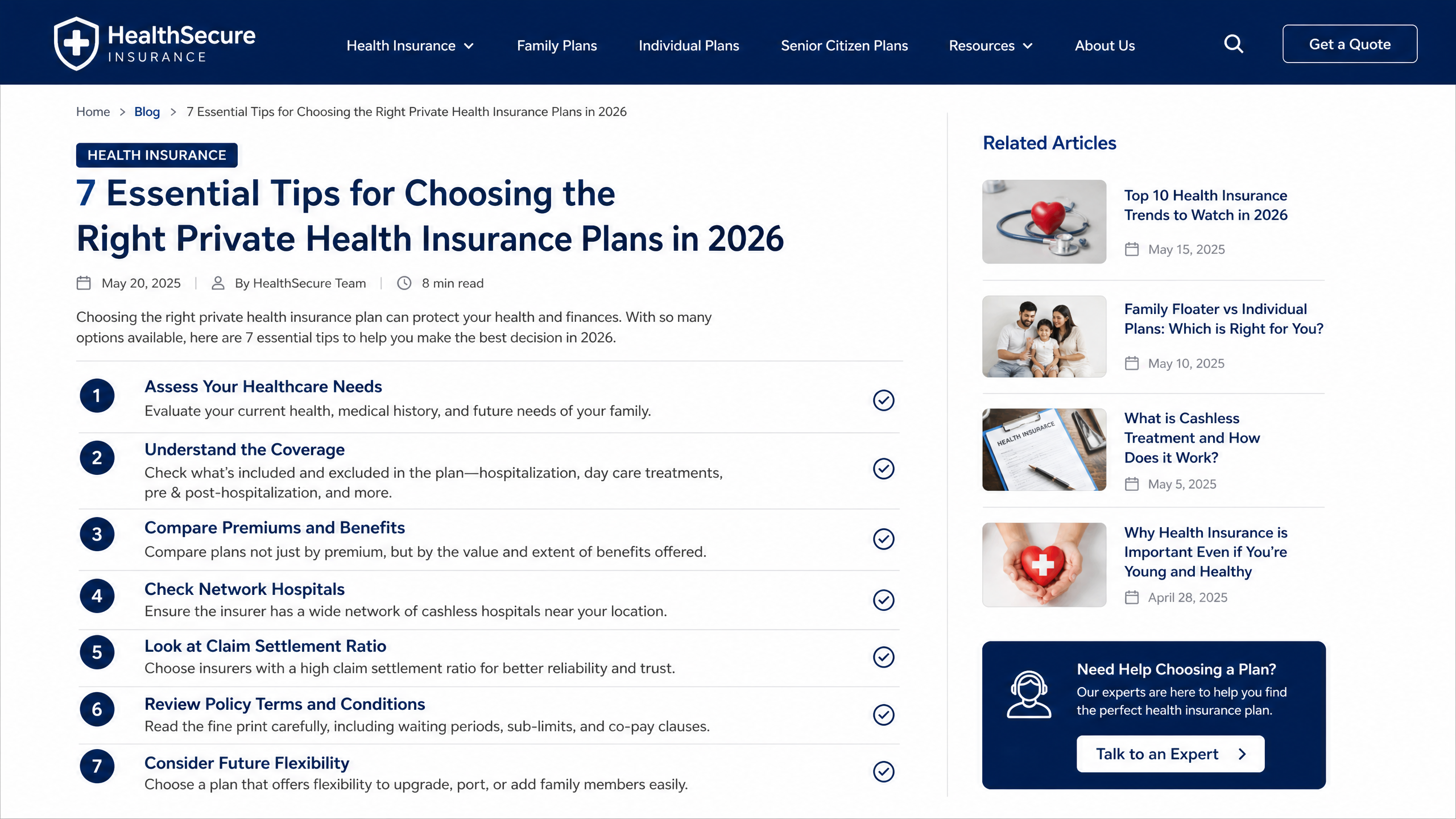
7 Essential Tips for Choosing a Plan
Selecting the right coverage can be overwhelming, but by following these seven essential tips, you can confidently choose the best private health insurance plans for your needs:
1. Assess Your Healthcare Needs
Before you start shopping, take a look at your current health and the health of your family members. How often do you visit the doctor? Do you have any pre-existing conditions? Understanding your healthcare needs will help you determine the level of coverage you require. For example, if you have a chronic condition that requires regular specialist visits, you will want a plan with a broad network of specialists.
2. Compare Multiple Options
Do not settle for the first private health insurance plans you come across. Take the time to compare multiple options from different providers. Look at the premiums, deductibles, copayments, and out-of-pocket maximums to find the plan that offers the best value. The Affordable Care Act (ACA) open enrollment period typically runs from November 1 to January 15 .
3. Understand the Open Enrollment Period
If you are shopping on the Health Insurance Marketplace, it is crucial to understand the open enrollment period. This is the time of year when you can sign up for a plan. If you miss this window, you may not be able to get coverage until the following year, unless you qualify for a Special Enrollment Period.
4. Look for Tax Credits and Subsidies
Many people are unaware that they may qualify for tax credits and subsidies that can significantly reduce the cost of private health insurance plans. Your eligibility is based on your income and family size. Be sure to inquire about these options when shopping for coverage.
5. Read the Fine Print
Before you commit to a plan, read the terms and conditions carefully. Pay attention to the exclusions and limitations. Make sure you understand what is covered and what is not. This will prevent any unpleasant surprises down the road.
6. Consider the Provider Network
As mentioned earlier, the provider network is a critical factor to consider. Make sure your preferred doctors and hospitals are in the plan’s network. If they are not, you may have to pay out-of-pocket for their services, or you may have to switch to a new doctor.
7. Seek Professional Advice
If you are feeling overwhelmed, do not hesitate to seek professional advice. Insurance brokers and agents can help you navigate the complex world of private health insurance plans and find the plan that best suits your needs. They can provide personalized recommendations based on your specific circumstances.
Understanding the Different Types of Plans
When shopping for private health insurance plans, you will encounter several different types of plans. Understanding the differences between these plans is crucial for making an informed decision.
|
Plan Type
|
Full Name
|
Premium Level
|
Network Size
|
Flexibility
|
Best For
|
|
HMO
|
Health Maintenance Organization
|
Lower
|
Smaller
|
Lower
|
Budget-conscious
|
|
PPO
|
Preferred Provider Organization
|
Higher
|
Larger
|
Higher
|
Maximum flexibility
|
|
EPO
|
Exclusive Provider Organization
|
Moderate
|
Moderate
|
Moderate
|
Network loyalists
|
|
POS
|
Point of Service
|
Moderate
|
Moderate
|
Moderate
|
Hybrid needs
|
How to Evaluate Coverage Options
To effectively evaluate private health insurance plans, create a spreadsheet or use a comparison tool to organize the information. For each plan, list the monthly premium, deductible, copayments, coinsurance, out-of-pocket maximum, and network restrictions.
By comparing these factors side-by-side, you can easily identify the plan that offers the best value for your specific healthcare needs and budget. When evaluating private health insurance plans, consider the following additional factors:
|
Factor
|
Why It Matters
|
|
Deductible
|
Amount you pay before insurance kicks in
|
|
Coinsurance
|
Percentage you pay after meeting deductible
|
|
Out-of-Pocket Maximum
|
Annual cap on your total expenses
|
|
Prescription Drug Coverage
|
Cost of your specific medications
|
|
Preventive Care
|
Free or low-cost screenings and checkups
|
|
Telehealth Services
|
Virtual doctor visits from home
|
The Importance of Network Restrictions
Network restrictions are a critical factor to consider when choosing private health insurance plans. If you go out of network, you may have to pay a significant portion of the cost of your care.
Before you commit to a plan, make sure your preferred doctors and hospitals are in the plan’s network. If they are not, you may have to pay out-of-pocket for their services, or you may have to switch to a new doctor.
According to the National Association of Insurance Commissioners, consumers can choose from a variety of private insurance options through agents, brokers, or directly from insurance companies . These plans do not have to comply with all ACA marketplace rules, so it is important to understand the differences.
Maximizing Your Benefits
Once you have chosen a plan, it is important to maximize your benefits. This includes taking advantage of preventative care services, which are often covered at no cost. It also includes understanding your prescription drug coverage and using mail-order pharmacies to save money on medications.
Many private health insurance plans offer additional benefits such as wellness programs, gym memberships, and telehealth services. Make sure to take full advantage of these extras to get the most value from your coverage.
Conclusion
Choosing the right private health insurance plans is a critical decision that can impact your financial well-being and your access to quality healthcare. By following these seven essential tips, you can confidently select a plan that meets your needs and budget.
For more information on navigating the digital landscape, check out our guides on AdX for Blogger, ADX for WordPress, and Google AdX Approval Requirements.