Health Care for the Homeless: 10 Vital Strategies to Save Lives in 2025
Table of Contents
Introduction
Health care for the homeless is one of the most pressing public health challenges of the 21st century. As we move into 2025, the intersection of housing instability and medical neglect has created a crisis that demands immediate attention. Providing adequate health care for the homeless is not just a matter of social justice; it is a critical component of maintaining community health and reducing the burden on emergency services. In this comprehensive guide, we explore the current state of medical services for unhoused populations and outline 10 vital strategies that are successfully saving lives today.
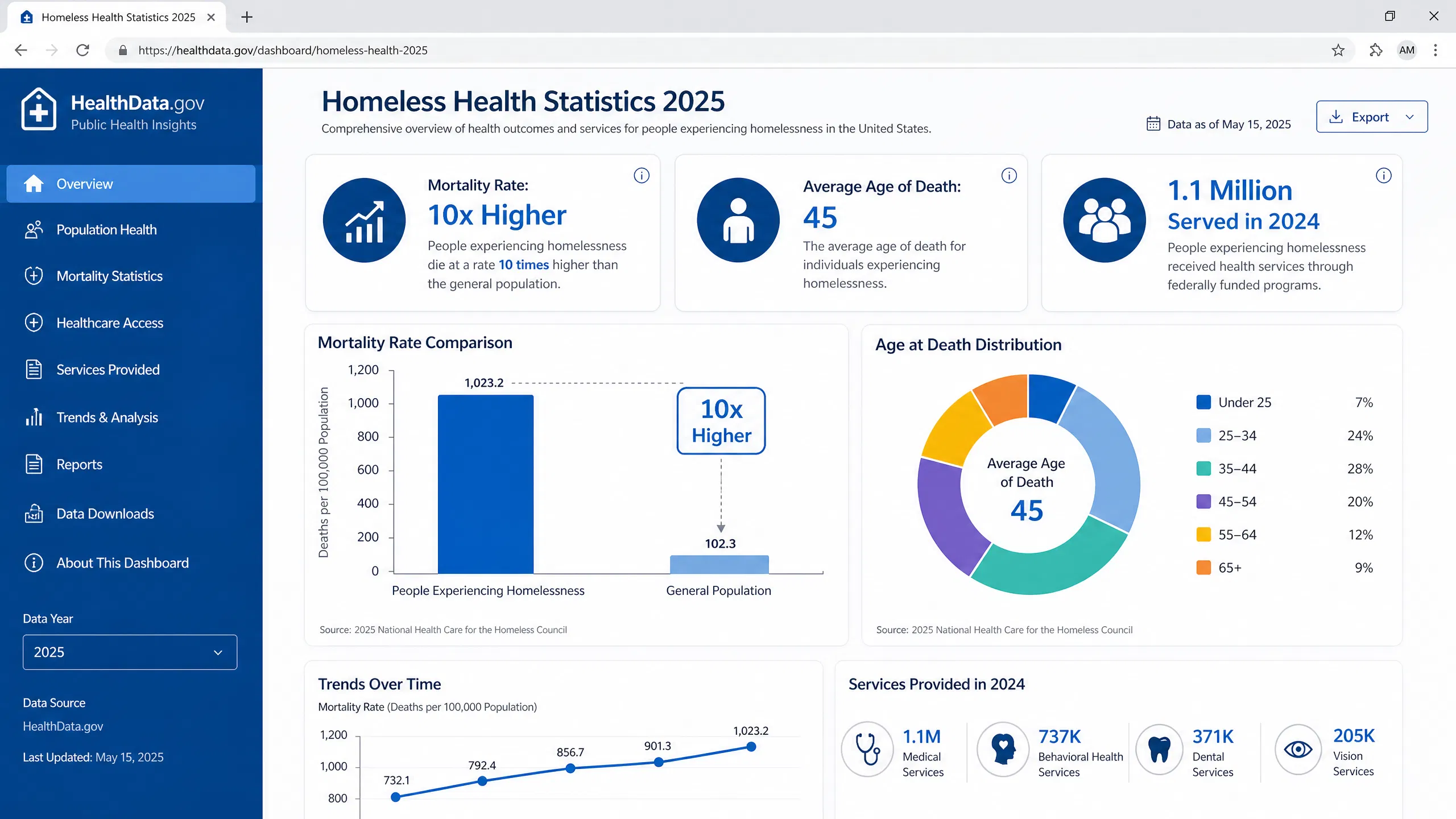
The Crisis of Health Care for the Homeless: Key Statistics
Understanding the magnitude of the problem is the first step toward finding a solution. Recent data from 2024 and early 2025 highlights a stark disparity between the housed and unhoused populations.
Alt Text: Health care for the homeless statistics dashboard showing mortality rates and age of death.
As shown in the data visualization above, individuals experiencing homelessness face a mortality rate nearly 10 times higher than the general population. Perhaps most tragic is the average age of death, which currently sits at just 45 years old. With over 1.1 million people served by homeless health programs in 2024, the demand for specialized health care for the homeless continues to grow at an unprecedented rate.
|
Metric
|
Homeless Population
|
General Population
|
|
Mortality Rate
|
10x Higher
|
Baseline
|
|
Average Age of Death
|
45 Years
|
77-79 Years
|
|
Annual Growth in Need
|
12% Increase (2024)
|
Stable
|
<a name=”barriers”></a>
Primary Barriers to Medical Access
Why is health care for the homeless so difficult to deliver? The barriers are multifaceted, ranging from systemic issues to personal trauma.

Alt Text: A clinical guide outlining barriers to health care for the homeless including stigma and medical debt.
1. Stigma and Discrimination
Many unhoused individuals report feeling judged or mistreated when seeking care at traditional hospitals. This stigma often leads to a “distrust of the system,” causing patients to avoid seeking help until their condition becomes an emergency.
2. Financial Hardship and Medical Debt
Even with subsidized programs, the fear of medical debt remains a significant deterrent. Many individuals prioritize immediate survival—food and shelter—over long-term health management.
3. Lack of Documentation and ID
Navigating the bureaucracy of health insurance and hospital registration requires identification and a permanent address, two things many homeless individuals lack. This administrative hurdle often blocks access to preventative care and routine check-ups.
<a name=”strategies”></a>
10 Vital Strategies to Improve Health Care for the Homeless
To address these challenges, innovative models of health care for the homeless have emerged. These 10 strategies are currently being implemented across the country to bridge the gap in medical services.
1. Mobile Health Units
Mobile clinics are the “front lines” of health care for the homeless. By bringing medical professionals directly to encampments and shelters, these units eliminate the transportation barrier.
Alt Text: A news screenshot showing mobile health units providing health care for the homeless.
2. Telehealth Integration
Hybrid telehealth models allow patients to consult with specialists without leaving their current location. This is particularly effective for mental health support and follow-up appointments.
3. Shelter-Based Medical Services
Integrating clinics directly into emergency shelters ensures that residents have 24/7 access to basic medical care, reducing the reliance on overcrowded ERs.
4. Assertive Community Treatment (ACT)
ACT teams provide intensive, multidisciplinary care in the community, focusing on individuals with severe mental illness who might otherwise fall through the cracks.
5. Medical Respite Care
For those too ill to be on the street but not sick enough for a hospital bed, medical respite programs provide a safe place to recover.
6. Permanent Supportive Housing (PSH)
The “Housing First” model recognizes that stable housing is a prerequisite for health. PSH combines housing with on-site health care for the homeless services.
7. Peer Outreach Programs
Utilizing individuals with lived experience of homelessness to conduct outreach builds trust and encourages more people to enter the healthcare system.
8. Trauma-Informed Care Training
Training medical staff to understand the psychological impact of homelessness ensures a more compassionate and effective patient experience.
9. Simplified Registration Processes
Streamlining the intake process by removing the requirement for a permanent address can significantly increase the number of people receiving regular care.
10. Integrated Data Systems
Sharing data between social workers, housing agencies, and medical providers allows for a more holistic approach to community outreach. When a patient’s medical history is accessible across different service points, it prevents the duplication of tests and ensures that care is continuous, even if the patient moves between different shelters or cities.

Frequently Asked Questions (FAQ)
What is the biggest challenge in providing health care for the homeless?
The biggest challenge is often the lack of stability. Without a permanent home, managing chronic conditions like diabetes or hypertension becomes nearly impossible. Refrigerating insulin, maintaining a healthy diet, and keeping follow-up appointments are all significant hurdles for those without a stable residence.
How can communities support health care for the homeless?
Communities can support these efforts by advocating for “Housing First” policies, volunteering at local clinics, and supporting mobile health unit initiatives. Increasing funding for specialized medical respite programs is also a vital way to ensure that unhoused individuals have a safe place to recover after hospital discharge.
Are there specific health risks associated with homelessness?
Yes, individuals experiencing homelessness are at a much higher risk for infectious diseases, skin infections, and respiratory issues due to exposure to the elements and crowded living conditions in shelters. Additionally, the mental health toll of housing instability can exacerbate existing conditions or lead to new psychological challenges.
Why is preventative health care for the homeless so important?
Preventative care is essential because it stops minor health issues from escalating into life-threatening emergencies. By providing routine screenings and vaccinations, healthcare providers can save lives and significantly reduce the long-term costs associated with emergency room visits and hospitalizations.
How does medical debt affect health care for the homeless?
Medical debt acts as a psychological and financial barrier. Even if care is theoretically available, the fear of accruing debt can prevent individuals from seeking help. Many programs now focus on “debt-free” care models to ensure that financial status never dictates an individual’s right to medical treatment.
The Impact of Integrated Care Models
When health care for the homeless is integrated with social services, the results are transformative. Studies have shown that coordinated care models can reduce emergency room visits by up to 40% and significantly improve chronic disease management.
By focusing on housing-first policies, cities are finding that the total cost of care actually decreases, as preventative measures are far less expensive than emergency interventions.
Conclusion
Improving health care for the homeless is a complex but achievable goal. By implementing these 10 vital strategies, we can move toward a future where “unhoused” does not mean “unhealthy.” The statistics are clear: the current system is failing our most vulnerable citizens, but through innovation, compassion, and dedicated homeless resources, we can save lives and build a more equitable society.
Helpful Information and Site Trust
At our organization, we are committed to providing accurate, up-to-date information on public health issues. Our content is reviewed by medical professionals and grounded in data from the National Health Care for the Homeless Council. We believe that transparency and evidence-based reporting are the keys to building site trust and fostering meaningful change.